
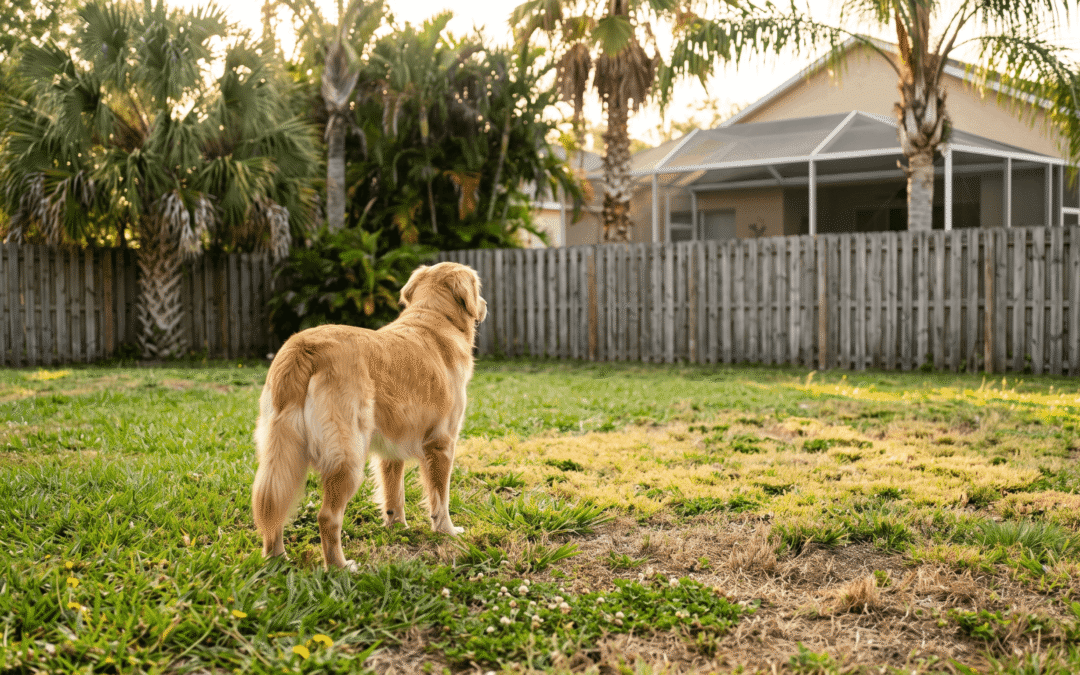
If you are wondering, “is dog poop bad for grass?” the short and definitive answer is yes. Leaving dog waste on your lawn is one of the fastest ways to damage a healthy yard, despite what you might have heard. We need to bust the myth that canine waste acts as a beneficial, natural fertilizer for your home landscaping.
This misconception usually stems from the fact that cow and horse manure are widely used in agriculture. Homeowners understandably assume that all animal waste behaves the same way when it hits the soil. However, the biological reality is different, and treating dog waste like livestock manure leads to dead patches and soil contamination.
In this guide, we will break down the science behind what makes dog waste harmful to soil ecosystems. We will explore the visual stages of lawn damage, highlight the unseen health risks lurking in your yard, and give you actionable steps to protect your property. By understanding the chemistry at play, you can keep your Central Florida lawn looking pristine all year long.
Is Dog Poop Bad for Grass? The Short Answer
When evaluating whether dog poop is bad for grass, it comes down to three factors: concentrated nitrogen, acidity, and salts. Unlike mild compost, canine waste introduces a chemical shock of these elements directly to the grass blades and root system. This concentration is why you see burn spots rather than lush growth where your dog does their business. The damage is chemical, immediate, and compounding if the waste is left to sit untreated.
Why Dog Poop Isn’t Fertilizer (The Cow Manure Myth)
To understand the difference between fertilizer and lawn damage, you have to look directly at the animal’s diet. Cows and horses are herbivores that graze on plant matter, resulting in a low-nitrogen, high-fiber manure that gently enriches the soil. Herbivore manure is naturally balanced, neutral in pH, and acts as a safe, slow-release nutrient source for grass.
Dogs, on the other hand, are omnivores that consume processed, protein-rich diets every day. When their digestive systems break down those proteins, the biological byproduct is an excess of nitrogen excreted in their waste. Dog waste is acidic and carries a concentration of nutrients that plants simply cannot process all at once.
This excess nitrogen is the primary reason why dog waste burns rather than feeds your grass. Instead of slowly releasing nutrients, the acidic and nitrogen-heavy waste shocks the grass roots, acting more like a localized chemical burn than a natural compost. You simply cannot treat a carnivore or omnivore’s waste the same way you treat an herbivore’s manure.
How Dog Poop Damages Your Lawn
The damage caused by dog waste is a multifaceted chemical process that affects your yard from the blades down to the soil. When waste is left to sit, it triggers a chain reaction of environmental stress that your grass cannot withstand. Here is how that damage unfolds on a biological level in your yard.
- Nitrogen burn – While a little nitrogen is good for lawns, the concentrated nitrogen in dog waste scorches the grass. It creates a localized overdose that pulls moisture out of the plant cells through osmosis. This dehydrates the plant and kills the patch from the roots up.
- Salt stress – Canine waste contains dietary salts that leach directly into the soil beneath the pile. These salts dry out the surrounding earth and the grass blades, worsening the initial nitrogen burn. This double effect prevents new growth and hardens the topsoil over time.
- Acidity and pH imbalance – Dog waste is acidic, which disrupts the delicate pH balance of your lawn’s ecosystem. This acidity blocks the root system’s ability to absorb vital nutrients like iron and zinc. Even if the surrounding soil is healthy, the grass starves because the pH barrier prevents proper nutrient uptake.
- Slow decomposition – Unlike plant-based compost, canine waste can take up to a full year to break down organically in your yard. During this period, it continuously leaches excess nitrogen, salts, and bacteria into the ground. This ongoing contamination compounds the initial lawn damage with every passing month.
- Lawn fungus – The warm, moist, and nitrogen-rich environment created by decomposing waste is a breeding ground for fungi. This leads to the growth of mushrooms and turf diseases right at the site of the mess. These fungal infections can then spread to otherwise unaffected areas of your lawn.
The Stages of Dog Poop Lawn Damage
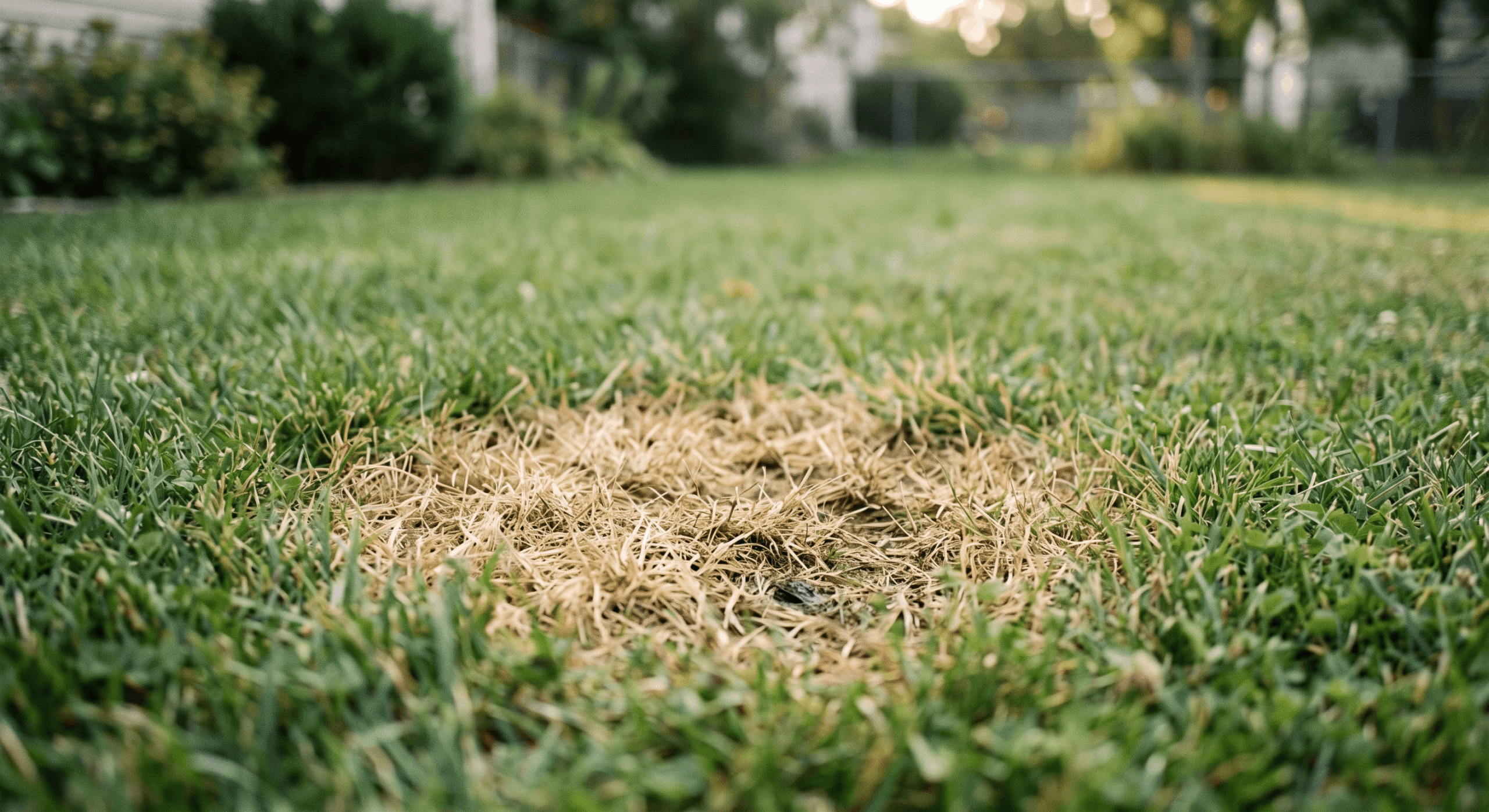
Lawn damage from canine waste does not happen instantly; it follows a predictable progression as the chemicals seep deeper into the soil. By recognizing these visual cues early, you can intervene before the grass is destroyed. Here are the three distinct stages of damage you will see in your yard.
- Stage 1: Dark green patches – At first glance, the affected area may look deceptively lush, tall, and deep green, making you think the grass is thriving. However, this is actually the first sign of early nitrogen overload, and the plant is beginning to stress. The nutrient rush forces rapid, unsustainable growth just before the burn sets in.
- Stage 2: Yellowing blades – As the nitrogen burn takes hold and moisture is stripped away, the tall green blades will begin to turn yellow. This is your last chance to save the spot by physically removing the waste and flushing the area with water. If you wait longer, the roots will dehydrate and collapse.
- Stage 3: Brown, dead spots – Once the area turns brown, the grass root system has been killed by the chemical burn. At this final stage, watering will no longer help, and the patch is dead. The affected topsoil will need to be scraped out, and the area must be reseeded.
It’s Not Just Your Grass – The Health Risks
People often ask if dog poop is bad for grass, but they forget about the health risks attached to the mess. Pet waste is a vector for disease, harboring microscopic threats that can be tracked into your home on shoes or paws. Understanding these hidden dangers is critical for protecting the well-being of your household.
- Harmful bacteria – Pet waste is loaded with bacterial pathogens, including E. coli, Salmonella, and fecal coliform. A single gram of dog waste can contain millions of bacteria, presenting a health risk if accidentally ingested or tracked indoors. This raw bacteria easily washes into storm drains, contaminating local water systems.
- Resilient parasites – Canine waste often carries parasites like roundworms, hookworms, and Giardia, which shed microscopic eggs directly into your lawn. These eggs are hardy and can survive in the topsoil for years, waiting to infect a new host. For detailed information on zoonotic diseases, you can review safety guidelines from the CDC.
- Risk to kids and pets – Children who play in the yard and dogs who sniff the grass are the most vulnerable to these lingering pathogens. It is essential to wash your hands thoroughly after any potential contact with contaminated soil or outdoor toys. Preventing exposure requires keeping the yard free of accumulating waste.
- Attracts pests – Piles of decomposing waste act as a natural magnet for insects and rodents looking for an easy food source. Flies, fleas, and ticks are drawn to the accumulation, increasing the likelihood of pest infestations near your home. These insects can then carry the bacteria into your living spaces.
These biological hazards make rapid waste removal a matter of basic home safety, far beyond just keeping your lawn looking pristine.
Common Myths About Dog Poop and Grass (Debunked)
There is a lot of bad advice floating around the internet regarding yard maintenance and pet waste management. Believing these misconceptions will not only damage your lawn but also affect your local environment. Let’s clear up some of the most persistent myths.
- Rain will wash it away – Heavy rain does not magically dissolve the waste; it simply washes the raw bacteria and excess nitrogen into local runoff. In storm-heavy regions, this pollutes local waterways, storm drains, and municipal water supplies. It spreads the contamination rather than safely eliminating it.
- The mower will mulch it – Running a lawnmower over a pile of poop does not fertilize the grass; it just grinds the waste into tiny fragments. This spreads pathogens and acidic compounds across your lawn. It maximizes the damage and makes the yard unsafe for walking.
- It’s a natural fertilizer – Pet waste can only become safe fertilizer if it is properly processed in a specialized hot-compost system that reaches over 145 degrees Fahrenheit. Raw waste sitting directly on your lawn provides zero agricultural benefits. It must be chemically altered through heat to be useful.
- Lime or baking soda neutralizes it – While adding these powders might temporarily adjust the soil’s surface pH, it does not undo the deep nitrogen burn. Furthermore, these household remedies do nothing to kill the bacterial pathogens left behind in the dirt. You are simply masking the visual problem rather than solving it.
How to Protect Your Lawn from Dog Waste Damage
Now that you understand exactly what makes dog poop bad for grass, preventing the damage is straightforward. With a little consistency and proactive yard management, you can maintain a beautiful yard despite having a four-legged friend. Here are the most effective strategies to implement today.
- Remove waste promptly – Picking up the poop daily is the gold standard for lawn protection, but weekly removal is the bare minimum. The less time the acidic waste sits on the grass blades, the less opportunity it has to cause chemical burns. Consistent removal stops the damage before it can start.
- Flush burned spots with water – If you notice a fresh spot where your dog just went, watering the area will help dilute the residual nitrogen and salts. However, you must only do this after physically removing the solid waste, never as a replacement for scooping. Flushing the area washes the excess nutrients below the sensitive root zone.
- Create a designated potty area – Train your dog to use a specific corner of the yard covered in gravel, turf, or dog-safe mulch. This safely confines the high-nitrogen waste to one easily manageable spot, protecting the rest of your sensitive grass. It makes cleanup faster and preserves your main landscaping.
- Reseed dead patches – Once a spot turns entirely brown, the roots are dead and the grass will not recover on its own. You will need to scrape away the contaminated topsoil, flush the area, and apply new seed to restore the patch. Waiting for it to grow back naturally will simply leave a permanent bald spot.
- Consider a professional service – For busy households with multiple dogs or packed schedules, keeping up with the mess can feel overwhelming. A regular, scheduled removal service ensures that nitrogen and bacteria never have the chance to accumulate to damaging levels. It automates the protection of your lawn and your family.
Keep Your Central Florida Lawn Healthy with Poop Bandit
The combination of heat, humidity, and afternoon rain makes Central Florida lawns vulnerable to pet waste. The sun accelerates the chemical nitrogen burn, while frequent storms spread the harmful bacteria across your property. If you want to keep your grass green and your family safe, consistent waste removal is a necessity.
That is exactly where Poop Bandit steps in to help our local community. We offer reliable, weekly residential dog poop removal, and we haul the waste completely off your property so nothing sits baking in your trash can. For yards that need extra care, we also offer professional sanitizing and deodorizing treatments to eliminate lingering odors and kill microscopic pathogens.
Contact Poop Bandit today for a free, no-obligation quote and let us do the dirty work!
Frequently Asked Questions
Does dog poop really kill grass?
Yes, dog poop is bad for grass and will kill the fragile root system if left untreated. The high concentration of nitrogen and dietary salts creates a chemical burn that dehydrates the grass blades. Once the grass turns fully brown, the damage is permanent and requires reseeding.
Is dog poop good fertilizer for lawns?
No, dog poop is not a good fertilizer because dogs are omnivores consuming processed, high-protein diets. Their waste contains far too much acidic nitrogen, which scorches the earth rather than nourishing it. Only waste from pure herbivores, like cows or horses, acts as a beneficial natural fertilizer.
How long does dog poop take to break down on grass?
Depending on the specific local climate and weather conditions, dog waste can take up to a full year to break down organically. During this slow process, it continuously leaches bacteria, salts, and nitrogen directly into your topsoil.
Can I just hose dog poop into the lawn?
You should never use a hose to wash solid dog waste directly into your healthy grass. This liquefies the nitrogen and bacteria, spreading the contamination deeper into the root system. It spreads the damage across a wider area of your yard.
How often should I remove dog poop to protect my grass?
For the best results and maximum lawn protection, you should aim to remove dog waste on a daily basis. If daily scooping is not possible, a weekly removal schedule is the minimum required. This prevents severe chemical burns and bacterial buildup.
Does dog urine damage grass too?
Yes, dog urine causes the exact same type of nitrogen burn as solid waste, often resulting in distinct yellow or brown circular patches. Because it is a liquid, the concentrated nitrogen soaks immediately into the sensitive root system. This makes it even faster at damaging the grass than solid waste.