
Parasites and Diseases You Should Know
It’s easy to think of dog poop as just a gross, smelly nuisance, something to step around and forget about. But the truth is more concerning than most pet owners realize. Dog waste isn’t harmless. It’s essentially raw sewage, and it can carry a surprising number of parasites and bacteria that pose real health risks to you, your children, and your pets.
If you’ve ever wondered whether that pile in the corner of the yard is actually dangerous, the short answer is yes. And the risks don’t disappear just because the visible waste is gone. Let’s break down exactly what’s hiding in dog poop, who’s most at risk, and how to keep your family safe, especially here in Central Florida, where our warm, humid climate helps these pathogens thrive.
The Short Answer: Yes, Dog Poop Can Make People Sick
Healthy-looking dogs can still carry parasites and bacteria in their waste, often without showing any symptoms themselves. When that waste sits in your yard, those pathogens can survive in the soil and grass for weeks, months, or even years, waiting for a host.
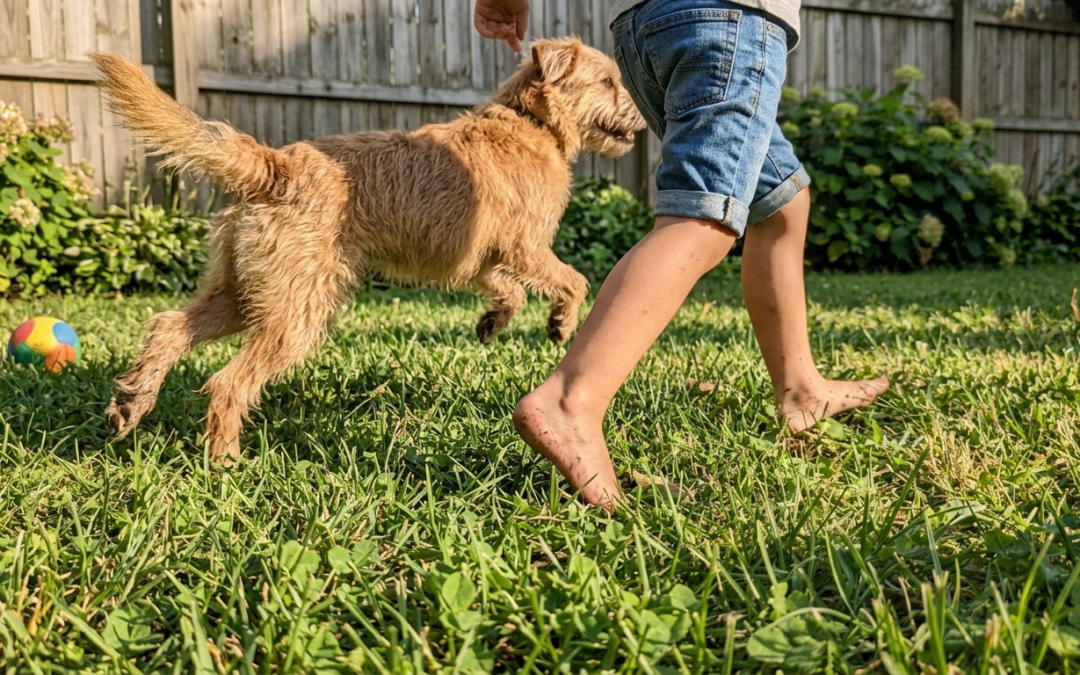
People and pets come into contact with them in everyday ways: walking barefoot across the lawn, gardening, kids playing in the grass, or simply tracking contaminated soil into the house on shoes and paws. You don’t have to touch the waste directly to be exposed. This is exactly why occasional cleanup often isn’t enough to keep a yard truly safe.
Parasites Found in Dog Waste
Dog feces can harbor several parasites that are transmissible to humans. These are some of the most common:
Roundworms (Toxocara). Perhaps the most concerning. Dog waste can contain microscopic roundworm eggs, and if accidentally ingested, usually through hand-to-mouth contact, they can cause a condition called toxocariasis. According to the CDC, in serious cases, the larvae migrate through the body and can cause organ damage or even vision loss, with young children most often affected. Alarmingly, roundworm eggs can survive in soil for up to four years, and they last especially long in hot, humid regions like Florida, where the climate keeps them viable in the soil far longer.
Hookworms. These parasites can penetrate human skin directly, often through bare feet walking across contaminated ground, causing itchy rashes and, in some cases, intestinal problems.
Tapeworms and whipworms. Both can be shed in dog stool and pose a risk of infection, particularly to children who play in contaminated areas.
Giardia and Cryptosporidium. These microscopic protozoa are shed in dog stool, especially from puppies. When ingested through contaminated soil or water, they cause giardiasis and cryptosporidiosis, leading to diarrhea, cramps, and dehydration that can linger for weeks.
Bacteria Found in Dog Waste
Beyond parasites, dog poop is a breeding ground for harmful bacteria, many of which cause serious gastrointestinal illness in people:
- E. coli – can cause severe digestive problems, and in vulnerable people, kidney complications.
- Salmonella – a well-known cause of fever, diarrhea, and stomach cramps, and a particular concern for children.
- Campylobacter – one of the leading causes of bacterial gastroenteritis.
- Yersinia – can multiply even in cold water and cause intestinal infections.
These bacteria don’t stay put, either. They transfer easily from your lawn to shoes, pet paws, and hands, and eventually into your home, putting your family at risk even without direct contact with the waste itself.
Don’t Forget About Dog Urine
It’s not just the solid waste. Dog urine can contain Leptospira, the bacteria responsible for leptospirosis, a serious illness that can affect the liver and kidneys. As urine and feces dry out, they can also release ammonia and airborne particles that irritate the respiratory system, a real concern for anyone in the household with asthma or allergies.
Who Is Most at Risk?
While dog waste is a hazard to everyone, some people are far more vulnerable:
- Young children are the highest-risk group. They play in the grass and dirt, and frequently put their hands and objects in their mouths, making accidental ingestion of parasites and bacteria much more likely.
- The elderly and anyone with a weakened immune system face a higher chance of serious complications from infection.
- Pets are also at risk, especially puppies, who can contract dangerous diseases like parvovirus from contaminated ground.
For families with kids or pets, a yard with accumulated dog waste isn’t just unpleasant. It’s a genuine health concern.
The Myth of “It’ll Just Break Down”
One of the most common and dangerous misconceptions is that dog poop is a natural fertilizer that simply breaks down and disappears. It doesn’t. Unlike manure from plant-eating animals, dog waste is high in protein and nitrogen, and it doesn’t safely decompose into your lawn. (We cover the damage it does to your grass in detail in our guide on whether dog poop is bad for grass.)
You also can’t rely on composting to solve the problem. Most home compost piles, and even many commercial composters, never reach the sustained high temperatures needed to kill these pathogens. That’s why dog waste should never go in your yard-waste or compost bin. Left on the ground, the waste may seem to fade away, but the parasites and bacteria it leaves behind can persist in your soil long after.
How to Protect Your Family
The good news is that these risks are entirely manageable with a few consistent habits:
- Remove waste promptly and regularly. The longer it sits, the more pathogens accumulate in your soil. Consistent, thorough removal is the single most effective step.
- Wash hands after any time spent in the yard, gardening, or handling pet areas, and teach children to do the same.
- Keep your dog on a regular deworming and vaccination schedule as recommended by your vet. The CDC notes that treating pets for roundworm is one of the most effective ways to reduce the risk to your family.
- Don’t compost dog waste or put it in yard-waste bins.
- Consider a professional pet waste removal service to ensure your yard is thoroughly and consistently cleaned, so nothing is missed. (Not sure what to look for? See our guide on choosing between a franchise and a local pooper scooper.)
For busy families, keeping up with truly thorough cleanup week after week is hard, and that’s exactly where the risk creeps back in. A professional service takes it off your plate entirely.
Keep Your Yard Clean, Safe, and Worry-Free
At Poop Bandit, we help families across Orlando and Central Florida keep their yards clean, healthy, and safe for kids and pets. Our professional technicians remove every trace of dog waste, haul it away, and even sanitize their equipment between visits to prevent the spread of disease from yard to yard. We proudly serve communities across the area, including Winter Garden, Windermere, Apopka, Clermont, and many more.
Whether you have one dog or a whole pack, our residential dog waste removal service takes the worry and the health risk out of your hands. We also offer optional deodorizing and sanitizing for an extra layer of protection.
Don’t let hidden parasites and bacteria put your family at risk.
Get a Free Quote Today or call us at (407) 604-1008.
Frequently Asked Questions
Can you get sick from dog poop in your yard?
Yes. Dog waste can contain parasites like roundworms and giardia, and bacteria like E. coli and salmonella, that spread to humans through contaminated soil, grass, shoes, and hands. You don’t have to touch the waste directly to be exposed.
How long do parasites and bacteria survive in the yard?
Longer than most people think. Roundworm eggs can survive in soil for up to four years, and bacteria like E. coli and Salmonella can persist for months. This is why waste that “looks gone” can still leave your yard contaminated.
Is dog poop dangerous to children?
Especially so. Children are the highest-risk group because they play in the grass and often put their hands and objects in their mouths, making accidental ingestion of parasites much more likely.
Does dog poop break down on its own?
Not safely. Dog waste is not a fertilizer, and it doesn’t harmlessly decompose into your lawn. The pathogens it contains can survive in the soil long after the visible waste is gone. Composting usually doesn’t kill them either.
How often should I have my yard cleaned to stay safe?
For most families, weekly removal is a good baseline, and homes with multiple dogs may benefit from more frequent service. Consistent, thorough cleanup is the key to keeping pathogens from building up.